Tuesday, October 18, 2011

TAKE SHELTER


Take Shelter is a film about omens. The word ‘omen’ is an antique term that lacks any kind of prognostic specificity. It is a thing, a sign, a vision or a coincidence that portends either fortune or disaster. Perhaps it comes from god, is generated unconsciously by nature or magic, or is somehow an outward manifestation of a personal hunch. The more unusual or blatant the omen, the bigger magnitude of the forthcoming doom. The trouble with omens, as writer and director Jeff Nichols points out, is that they involve essential and unnameable fears and joys: passions that cannot be worded let alone clearly communicated to another. Certainly, one has no way of knowing the validity or the meaning of an omen that is described to us by another.

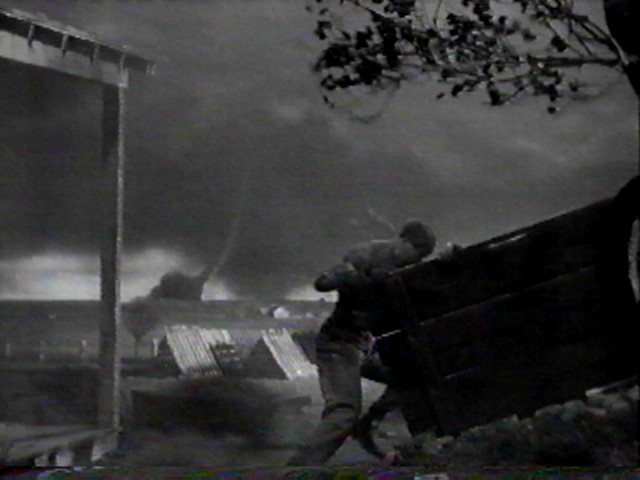
Perhaps the perfect epithet of the omen is the storm. It is literally, a dark cloud looming in the near future, observable and slowly advancing. If there can be something more bloodcurdling than an apocalyptic storm, it is surely being able to see its certain, fated approach.

Michael Shannon gives a magnum performance as the strapping everyman Curtis LaForche, a loving husband to beautiful wife Samantha (Jessica Chastain) and father to darling six-year-old Hannah (Tova Stewart). Curtis works long hours as a crew chief at a sandmining company and devotes much of his spare time to ASL workshops to connect and communicate better with Hannah, who is deaf. His happy home is the envy of his jaded crewmembers. However, something is welling up inside Curtis that is setting his family life on edge. He has an inexplicable feeling that his family are unsafe, that something wicked this way comes. He begins to have physically affecting nightmares, and waking apocalyptic visions in which a vast, inescapable storm engulfs his family. Keeping these torments to himself, he focuses instead on the overhaul of the decrepit storm shelter in his yard, a project none of his neighbours find rational. The prophetic episodes are impossible for Curtis to ignore, seeming like biblical warnings of an approaching disaster, insistent, alarming and so distinct as to be mistaken for reality. On the other hand, Curtis has a family history of early-onset paranoid schizophrenia, the initial symptoms of which he has been secretly dreading his whole life.

The visuals used in Curtis’ dream and hallucination sequences are an elegant expression of the notion that something isn’t quite right with the world. Birds circle in improbably great numbers; clouds form obscenely wrong shapes; raindrops fall black and oily. The grandiose, baroque appearance of the storm itself is only outsized by Shannon’s incredible performance as a man afraid, wearied and burdened by the weight of having to decide between believing he is delusional or believing he is right, and knowing that either way his family may be doomed.

Michael Shannon takes on the lion’s share of the screen time with an unreservedly committed performance. Shannon is handsome in an old-fashioned kind of way, like a working class version Darryn Stephens or Mike Brady. He has the strong jaw and forehead-grazing curl of a capable hero, perhaps giving him further to fall as he plumbs the depths of his own insecurities.

Nichols’ debut script is exceptionally well written, sparing with dialogue whilst maintaining an all-American elegance. It deals with Curtis’ downfall by giving equal credence to both the probability and seriousness of mental illness and the magical poesis of the visions themselves. They come across as something of a natural phenomenon like a mirage or an echo that only one person can sense. No time is wasted labouring over the family’s blissful life toward the beginning of the film, instead the quality and importance of Curtis’ family life is expressed by his and their reactions to his encroaching despair. Jessica Chastain in particular treads a fine line between unconditional love and personal anguish, which better elucidates the past rapport between the couple than any prolonged exposition could.

The original soundtrack, by David Wingo, is piercing and induces audience attention and sentiment with a force not unlike Moses parting the waters. Trickling glockenspiel sounds mirror the toxic raindrops Curtis is plagued by, and a low, restless string section transforms every strewn play set, rolling storm cloud and wind-ruffled wheat field into a desolate and threatening omen. This musical accompaniment is almost like a second lead beside Shannon, played as a duet between the strung out Curtis and his straying ‘other self’ as it becomes increasingly receptive to visions and noises and fear. It is an incredible embodiment of the sensation one might get when constantly double-checking the reality or normalcy of one’s own experience and behaviour.

This film is a superb example of modern American storytelling. It is steeped in some of the most deeply embedded values that exist in American culture. Most urgently, the need to protect the family within a fortified property, financial and physical security, involvement in community activities and centrally, this archetype of the hard-working, breadwinning, emotionally introverted husband and father.

It also resonates with the long-standing apocalyptic tradition that America is the seat of the world: isn’t it true that cinematic contact with aliens, zombies, vampires, superheroes and angels is always made in a cornfield outside a whitewashed, petunia-lined bungalow? Indeed, Curtis believes that if the end of the world is coming, it will surely start in his backyard, just as he, the All-American Father, is the only one who can shield Samantha and Hannah from it. Take Shelter feels like it must be based on a McCarthy novel, such is the grand literary sensibility of the script.

Similarly, Take Shelter evokes some of the most catastrophic and spectacular disasters that have plagued Middle American regions, calling upon an essential American fear of the dustbowl, the tornado, the lightning storm and especially in light of New Orleans, the American deluge. I suspect art director Jennifer Klide took not a few clues from the sepia-tone exposition of twister-classic The Wizard of Oz, and the magnificent and iconic 1948 painting by Andrew Wyeth, Christina’s World. One feels as though the pacing of the script mirrors these great acts of god, being a kind of exponential whirlwind, an avalanche that gathers speed and crashes into the end of the film with the utmost emotional force.

This powerful and breathtaking film has been duly decorated at Cannes and Sundance and I would not be greatly surprised to see it nominated during the US awards season. It’s a unique narrative that manages to harness some of the force of the diabolical natural dynamism it hints at, directing it toward us almost personally. It also captures some fragment of increasing global anxieties about the unpredictability and poisonous contamination of nature’s phenomena, and about the economic turmoil of the financial crisis. Nowhere are these worries more concentrated than in the U.S. (indeed most things are more concentrated in the U.S.), where many families are experiencing the loss of their domestic securities and equilibrium. If Take Shelter forces us to consider the omen more carefully, perhaps these worries will manifest in still more distinct precautions buffering the family unit against all possible ills; the storm shelter, the safety whistle, airbags, insurance. Take Shelter asks – is the absence of paranoia essentially characterised by not taking precautions; and, if we must acknowledge imminent doom as a basic part of human existence, what omens, whether scientific, behavioural, illusory, divine, preternatural or magical, can we trust in?

9.0/10

Monday, October 17, 2011

THE THREE MUSKETEERS


The 1650’s gave us the periwig, the man’s pearl earring, and the bulky starched ruff but perhaps its greatest contribution to modern romanticism was this term: swashbuckling. The onomatopoeic “swash” is of course the sound that a fencing foil makes when it whips past its opponent and a “buckler” is a shield. Herein lies the suggestion that a swashbuckler is somebody who blusters around banging on their enemy’s armour, brawling and waxing lyrical in a show of drunken bravado. That about describes Athos (Matthew MacFadyen), Porthos (Ray Stevenson) and Aramis (Luke Evans), better known as The Three Musketeers.

It might seem hard to have any fun when draped in heavy jewels or sporting a codpiece, strangling corset or suspicious goatee, but adventure seems to cling to this Parisian era, and most especially to this film. The Three Musketeers is riotously funny, enriched by a charming and wonderfully adept cast and engulfed in a world of top-quality stunts, special effects and costuming. More importantly for an adventure film, however, it has all the melodrama of a Shakespearean intrigue whilst remaining coherent, surprising and witty.

Tearaway country boy D’Artagnan (Logan Lerman) has left his humble roots in a green-pastured village to pursue a far-less-humble career in Paris as a Musketeer, one of Louis the XIII’s musket-slinging infantry branches. Unfortunately he finds that the once legendary Musketeers have fallen upon hard times, lacking great causes to lend their skills to and spending their spare time drinking, eating and picking fights. After an epic skirmish with the cardinal’s guard in a market square amuses the poncy and effeminate King Louis, the four are given the job of chasing down a beautiful double agent (Milla Jovovich as a first-class femme fatale) who is absurdly named Milady. The task, of course, is to retrieve a stolen treasure and prevent all-encompassing European war.
This little synopsis hardly does justice to the clever, madcap plotline of the film, and needs must skip over some of its best characters. Like me, you may find yourself overzealously elbowing your neighbour in the cinema as Gavin and Stacey’s James Corden appears as the Musketeers’ downtrodden but grateful servant Planchet; stifling a squeal of delight at the cold, shark-like performance of Christoph Waltz (Inglourious Basterds, Water For Elephants) as the calculating, uncharismatic Cardinal; or spilling your popcorn at the majestic appearance of Orlando Bloom’s self-lampooning Buckingham, a bedazzled and magnetic villain, the Russell Brand of 1650’s European foreign policy, a peacock in bulbous shorts and Jimmy Dean bouffant: the exact opposite of his character Will from the Pirates franchise. These characters are a pleasure to watch and director Paul Anderson has brilliantly maximised the impact of each cast by nodding toward the actor’s previous repertoire: Milla Jovovich scaling a wall in full Resident Evil swing, Matthew MacFadyen’s expressionless Mr. Darcy baritone and the casting of Mads Mikkelson, the Dane who has become indispensible to wherever an action film lacks a penetrating stare or flash of muscle (see Clash of the Titans, King Arthur, Casino Royale).

The Three Musketeers is a thrillingly inventive film when it comes to staging action. No two choreographed scenes are identical, each making use of the in situ opportunities for weaponry and acrobatics. No fight happens for its own sake but each contains a noble objective, a rivalry or revenge with which to enliven the struggle that much more. I must chastise myself for keeping from you for this long that Buckingham’s galleons are in fact airborne warships (think Up meets League of Extraordinary Gentlemen), making for some spectacular high-altitude action. All this is enhanced continuously but tastefully by the wonders of modern 3D, whilst never straying into vertigo territory or giving jaw-dropping depth to mundane scenes.

For families with children of a certain age films like The Three Musketeers may be crystallised into family culture, quotes, characters or scenes fondly recreated in jest in the living room for years to come. You know, that movie you watch together every year when it gets to hot to be outside on Christmas day, or that you know every line of off by heart, that first VHS that was your very own. It has the potential to be for youngsters what was embodied for me by The Labyrinth, The Princess Bride or The Dark Crystal: a film of humour and wit which gives life to a great story that encapsulates the hopefulness and ingenuity of childhood.

It could be a formative film, which is rare in a genre which tends to spend more time trying to impress than endear, and in which effects are often used as an indicator of expense rather than to create a magical world. Perhaps Anderson’s cleverest tactic is his dogged pursuit of telling a good story over pandering to a particular target market. As a result, this is not a family film, PG kids’ holiday flick or teensploitation adventure, but just a rollicking fable that should appeal to all-comers.

8.0/10

Thursday, October 13, 2011

THE THING


A remake-cum-prequel of the well-loved 1982 flick starring long-locked lothario Kurt Russell, The Thing doesn’t give us any innovation on the thrills of the original. The 'thing' itself is  victim to overzealous CGI, which never comes across as cutting edge. Whilst The Thing gracefully circumvents many of the plot pitfalls of blockbuster thrillers, there’s little chill or thrill about this year’s version of the alien who eats its victims then steals their bodily appearance.

In an isolated Norwegian-owned geological outstation caked in Antarctic snow, a unique discovery is made by a group of scientists: a subterranean alien spacecraft abandoned for a 100 thousand years and a deep-frozen life form suspended in a lake of ice. Operation chief Dr. Sander Halvorson (Ulrich Thomsen) recruits gifted American palaeontologist Kate (Mary Elizabeth Winstead) to supervise the thawing of the miscellaneously insect-like creature. Of course it escapes. Naturally it attacks. Obviously its cells take over the bodies of consumed victims who continue walking and talking until it seems opportune for the ghoul within to burst forth.

The Thing is a movie that has placed all its eggs in the tension basket. It fell short of capturing the ‘who is the creature?/it’s one of us’ theme that defines the films principle departure from most other monster films, a disappointment made sorer in that the 1982 version did it better. This is partly because the remake is unclear on the how and the when regarding the transformation of outstation scientists into the thing itself. It a confused mess – is there more than one thing? Can its cells be transferred by blood like a virus? How can it suddenly tear out of one character after the bloodied dude on the floor has been torched? In trying to keep us guessing about whom the thing is inside, director Heijningen Jr has opened a Pandora’s box of continuity questions. This has been a deliberate move to put the viewer in the same position as the characters. Instead the audience spends too much time trying to figure out the rules of the film in lieu of emotional involvement. Writers Eric Heisserer and John W. Campbell Jnr might take a leaf out of the murder mystery example, by at least proffering a red herring or two, allowing the audience to form theories or at least differentiating a little more between the hoard of bearded Norwegian extras so we know (and thus care) who is who, and in turn who is the Thing.

Visual effects are a key part of the success of any monster movie, and in combination with a number of intricate creature sculptures, The Thing doesn’t do an entirely bad job. A willingness to see the bizarre manifestations of the creature as laughable or indeed as allusions to other film terrors (Regan on the stairs, the ‘facehugger’, the Almighty Sarlacc, Thing Addams, et al) might enhance this appreciation. As hoped the vast whiteness of the poles is articulated as a spectacular and intimidating environment in which the wooden shacks housing the scientists reverently tremble. The power of the image of snow ablaze beneath the sweep of a flame-thrower prevented the kind of dark obscurity that may have haunted the tense interior scenes.

The thing is, this film might not be deserving of the title ‘The Thing’, attached as it is to tension, mystery, and classic cult horror. I mean it’s the Thing. It’s got to be special. The creature itself is a grotesque and largely unimaginative humanoid/arachnid mash-up and no creativity is employed in visualising its various states between human and creature. I am sure that I’m not the only one genuinely bored by the generic appearance of most movie monsters. The formula is this: black, spider-legged vertebrates with sticky, drooling inner mandibles that fold out like the world’s most disgusting blooming tulip to reveal vagina dentata or tentacly, fanged phalluses. Either this is a case of sameness, or the amorphous progeny of H. R. Geiger’s Alien has recently made cameo appearances in I Am Number Four, Cowboys and Aliens and Super 8. It is one thing to evoke fear by keeping the monster unseen; it’s another to just collage the viscera of man’s most-abhorred creatures together like some accidental chimaera.

            The Thing is certainly not a memorable film. The pacing was acceptable but repetitive and lacked any kind of mystery or surprise. After the thing escapes, it’s simply loud noises and characters dropping like flies until the end. I won’t name the surviving parties, but you can probably guess within the first ten minutes. Performances by Joel Edgerton as a heroic US chopper pilot and Eric Christian Olsen as Kate’s long-standing but pouty boffin pal are both good. Winstead is a highly likeable lead, though perhaps a little less swashbuckling than Kurt Russell. Happily, the dialogue omitted any formulaic exclamatory catchphrases and there was no predictable order of demise based on how big a jerk each character is, no “don’t-go-down-that-way”s and no sentimental self-sacrifices. Perhaps Matthijs van Heijningen Jr. was too bent on avoiding Hollywood gimmicks. The Thing did not replace the gaps most English-speaking audiences will feel were left by a more self-aware treatment. He replaced novelty with a dramatic script and believable, capable characters. Somehow that resulted in a lacklustre narrative. This Thing is a horror film with too dry a sense of irony or too staid a sense of fun to register as a contender for future cult-status. It’s just not colourful enough.

The wealth of charming and ‘technologically cute’ horror films made in the 1980’s is sizeable, and The Thing will not be the first or last re-make of some of the more classic examples. In thinking about this review, I discovered Time Outs top 50 list of film monsters. It’s a list of excellent films in which the monsters are foul, comical and terrifying all at once and seem to embody a kind of joy for filmmaking and all the frills of the horror illusion particular to directors like Peter Jackson, Stephen Spielberg and Ridley Scott. It might seem a little antithetical to recommend hitting the tape shop instead of the Extreme Screen on a film blog, but if you want to see a monster film soon, check out the list (below) before you look up what’s on at your local. There’s more fun to be had.  

And another thing…

6.5/10

TIME OUT’s 50 GREATEST MONSTER MOVIES:

Tuesday, October 4, 2011

THE CUP


In a national film industry that exerts more effort trying to find itself than in making original films, there is Australian cinema and then there’s Aussie Movies. The Cup is a ridgy-didge Aussie movie, roll-calling seasoned Australian actors alongside lowbrow TV personalities, sporting heroes, AFL footage, the Melbourne Cup, a few naff shots of Sydney Harbour and the kind of blokey slang I just don’t think exists outside of bushranger gangs or two-up circles at the Buffalo Club.

The Cup is the brainchild of writer/director Simon Wincer, veteran of the Australian film industry and passionate advocate of the kind of Australiana that we might associate with the late 1990’s, the end of VHS, fake tan, the birth of reality TV and heyday of first wave Australian sketch comedy (no surprise Shawn Micallef pops up in The Cup, as himself). Wincer has previously brought us Quigley Down Under starring the always-enjoyable Tom Sellick, and all of the grace and wit of Crocodile Dundee in Los Angeles. This back catalogue of films in which Aussies encounter the world and are deemed parochial but decent seems to be a good platform upon which to examine The Cup, which is a film needing international approval to be a success, yet constantly flirts with self-congratulation on the home front.

Based on a true story, The Cup is a very faithful dramatization of the lead-up to the 2002 Melbourne Cup international horse race, encompassing other events from the time, like the devastating Bali bombings and an elongated history of that year’s football. In particular it tells the story of Damien Oliver (played by Stephen Curry, of ‘Dale dug a hole’ fame), a leading jockey from Perth booked to ride a real contender called Media Puzzle. Then in the midst of the press rumour frenzy and formidable international competition, his brother, fellow jockey Jason, died in hospital after falling under his horse at full gallop. Damien’s preparation is stopped short as he battles with his mother to bear the loss, made all the more tragic for the memory of his jockey father, who died when he was a child in the very same manner. Suddenly the four million dollar question was ‘can he still ride in the Race That Stops the Nation’?

There are innumerable issues to be had with the way The Cup has been put together. A rainbow of clumsy editing, writing, casting, shooting and costuming decisions encircle the emotional core of this film like a thorny forest. To name a few: the flow of The Cup is a major structural flaw. It reads like a feature-length montage, in which dramatic sequences are too short and peripheral shots are too long, meeting in an unsatisfying middle ground. It creates a sense of irrelevance when for example; there is a five-second shot of a hand using a remote control amidst a dialogue sequence so breif it seems paraphrased. One is too long, the other too short. Basic casting mis-steps include allowing Jodi Gordon out of the Home and Away stable and the premature graduation of Alice Parkinson from Blue Water High. Other qualms include constant zooming into people’s faces to ‘enhance’ the mood á la hammy Brunei Airlounge soap opera, a pointlessly long AFL scene using stock footage and cameo appearances from Dennis Commetti and Eddie Maguire (I feel I cannot italicise that enough) and truly ridiculous dialogue between Damien and his girlfriend Trish. What de facto couple converse with ‘I just want to let you know I’m here for you’ and ‘I got this scar in 1999, this one in ‘93, it’s all just part of being a jockey’. Oh, and did I mention the score is the worst kind of over sentimental, off-season daytime instrumental music?

I guess a lot of these problems stem from the fact that The Cup is such a great story, an Australian story (if you will allow me to pun on serious television), and Wincer has become very protective of it. He wants it to belong to Australia but to be lucrative elsewhere, resulting in a grab bag of Aussie in-jokes that international audiences simply won’t appreciate, and a kind of overplayed reprieve in the dialogue describing how we own the cup and we own our nation. The Cup is a film anxious about how the greater Western world rates our cinema and so it ends up being about how we don’t need the rest of the world, because we Aussies have each other. If anything proves this it is The Cup’s cultural outlook: clichéd portrayals of unsmiling Arab Sheiks with great posture, tinny Irish panpipe ditties played over every single scene set in Ireland, and a French radio announcer babbling about the Arc Du Triomph. These are symptoms of a tendency to over-colloquialise everything.  

Despite these disappointments, the tragic elegy for the Oliver family and their triumph over grief is has an exceptional narrative arc and manages to find a voice, particularly towards the end of the film. The emotional build-up is highly charged, stripping away all of the periphery details to get to the point: the people. This is where Stephen Curry steps up to reach the high calibre that Brendan Gleeson (playing Horse Trainer Dermot Weld) alone maintained for the entire film. Curry’s wounded and confused Oliver is a modest and recognisable portrayal of grief.

The Cup is a film that I have no doubt would have been applauded if it had been released 12 or so years ago. This is the kind of movie I would have watched in between episodes of Who Dares Wins and Gladiators, as part of a midday TV program that also included a dramatization of the Stuart Diver/Thredbo disaster or Alaskan fire-fighter Robert Bogucki’s 43-day outback ordeal in the Great Sandy Desert. It’s not just the story is nearly a decade old, but the whole approach to the way the film is made, the music, the cutting, the stock footage seems dated. Wincer and his way of making movies seem to hail from that era before 9/11, before Australia needed to forge a professional, not gimmicky relationship with other countries, when its defiant, autobiographical cultural pursuits outweighed the desire to understand the world and Australia’s place in it, when we were still croc hunters, full forwards and bush tuckermen to ourselves as well as the world.

This is a movie I wish I could be more excited about, but it did make me think about what I want Australia to look like, culturally, to foreign nations all around the world. Do I want people to believe I have a pet kangaroo tethered near the red dirt at the end of my driveway? That every Cup day I pick sweeps out of an Akubra and punch the air with truckies over VB in a pub. Less superficially – do I want Australia to be a self-styled underdog? To eschew global collaborations or friendships? To me, these are concerns of the past. Australia is in a new era of culture and its film industry is for the most part progressing apace with the rest of world cinema.  

Maybe we'll get it third time lucky: The Cup, The Dish, The Tongs?

5.5/10

Monday, October 3, 2011

MIDNIGHT IN PARIS

There is a particular type of conversation I am fond of. It might be called something like ‘the extended hypothetical’. Often it involves the use of an offhand observation to launch into a film proposal or the conception of an imagined world in which all genres, favourite actors, personalities and references might be smashed together harder than particles in the LHC. You know the kind of thing: “During the zombie apocalypse I’ll track down Bear Grylls and we’ll build a jeep out of banana leaves and rattlesnakes, pick up Werner Herzog and hide out in the Cave of Forgotten Dreams eating tinned food until the whole thing blows over in 28 days. “

Not to get away from the point too much, I more often than not I find myself launched into these little monologues for the same reason anybody else does: we want to see all our favourite stuff in one place – on screen. This is how Snakes on a Plane happened. So if your “favourite stuff” involves the roaring twenties, mysterious schisms in time, French art history, the great American novelists, Woody Allen or Paris, you might just get your to have your extended hypothetical and watch it too.

Midnight in Paris is a rich and joyous film, an extended hypothetical in which the audience are invited to step into the past to test if our nostalgia for the romance of the last century is justified. It’s a film about the modern marvel of the city, which forces into close proximity great architecture, talent, riches and hardship. In the scheme of the whole universe, a vibrant city is no less than miraculous.

Owen Wilson plays Gil, a jaded Hollywood feature writer who longs for all things anachronistic, and is an accordion hybrid of Woody Allen at all ages. Gil has nearly finished his first novel, a semi-biography about a man in love with the past, part of his whimsical, aesthetic side that fiancée Inez (Rachel McAdams) hopes she and her bullish parents can harass out of him before their imminent wedding. Even on their trip together in Paris, Gil cannot shake the feeling he is being disapproved of, especially not when in the company of Inez’s friend Paul (Micheal Sheen in academic beard), whose relentless casual sermon on Parisian cultural history is wearing very thin indeed. Gil’s remedy for the information-era, shopping-as-creativity attitudes of his companions is to drunkenly wander the lit-up streets at night, finding inspiration for his novel. Of course, when the clock tower peals out the witching hour, Gil finds himself within a whole new Paris and surrounded, finally, by those brooding, artistic, night owls who understand him. It’s almost too much when he meets the lovely Adriana (Marion Cotillard), with whom he instantly connects.

Where Midnight in Paris deviates from classic Allen territory is in its integration of fully realised period scenes, in which set dressing and costumes recreate Paris in the ‘20s and in the heyday of the Moulin Rouge. The costuming is sensitive and sexy, evading all of the mufti campiness of TV drawing-room whodunits and the restrictiveness of bonnet dramas. Somehow the youth and familiarity of the historical parts are preserved, a monocle, moustache or drop-waist flapper dress seeming no less eccentric than some of the garb people wear out nowadays. It’s the liveliness of the past the audience is invited to partake of, rather than the prohibitive cultural differences between then and now. This is original and thrilling to watch.

There is an extent to which this film might be lost on those not well versed in art history or early modern literature, as it includes a magnificent roll-call of writers, artists and thinkers making cameo character appearances. For those a little more brushed up, there is riotous fun to be had watching the whole of 1920s Parisian bohemia played out before your eyes and inducing a double-star-stuck sensation when those personalities are played by current celebrities. Of particularly majesty is Adrian Brody’s other-plane Salvador Dali.

If Woody Allen knows one this it is voice. Midnight in Paris is a tour de force of literary impersonation. Throughout it the unique personalities and gravitas of such characters as Vera Fitzgerald, Pablo Picasso and Gertrude Stein are fully realised. They look, sound, are as you would expect them to be if you thought that a person might speak in the same with the same manner and intensity that they have written their most famous works. Yet they also seem approachable, so close to our reach we could ask them how their day went, what are you working on, want to get a drink? These are histrionic literary caricatures of a wholeness and precision that encompasses everything we know about each personality as it has sifted down to us through the decades. Kathy Bates as Stein is abrupt, didactic, stilted; F. Scott Fitzgerald (Tom Hiddleston) is lovelorn and chatty, though neither is a shade on Corey Stoll’s truly incredible rendition of Earnest Hemingway. Stoll balances intensity with sincerity, manly confidence with drunken spontaneity and forceful stare with robust moustache. His Hemingway absolutely sparkles as a kind of celestial example of someone living how they write.  

Allen is a sucker for a beautiful, educated woman. Indeed, Inez is so stunning, and indeed Rachel McAdams’ previous filmography is so charming, it takes a long time for either Gil or the audience to realise that Inez is inane and dramatic. She’s the kind of woman I hope never to be: entitled, unimaginative, unreasonable, easily won over, immodest and passive aggressive. This is an incredible piece of casting, and a clever companion for Wilson’s very apparent physical and verbal resemblance to the kind of male protagonist we love from Allen films. Gil experiences a kaleidoscope of wonderful events whilst remaining almost entirely passive throughout.

Midnight in Paris is a masterfully timed film. Revelations and exciting new characters spring up in a thrilling rhythmic crescendo. The script relishes all kinds of comedic possibilities, but never repeats itself, allowing Gil’s attention to be spent on more than just one-upping Paul, provoking his in-laws or making excuses to go back to his nocturnal wonderland.

Paris is a beautiful city, and Allen has written beautiful words and found beautiful people to fill it with. Though Allen’s script might be a kind of extended hypothetical in which he tries to figure out how he’d react to new love, the night and finding inspiration in Paris, the film is also a celebration of bohemia, art and resourcefulness. It’s a confirmation of everything we know about how new movements of music, art and literature come together, and our suspicion that the past was just as wonderful as we imagine it to be. This a story you will wish would happen to you, populated by characters you will adore and want to spend more time with.

9.5/10

Wednesday, September 28, 2011

HIGHER GROUND


Very occasionally when I receive a free screening pass it works out that for whatever reason, I’ve gathered zero background information about the film. I don’t know who’s in it, what it’s about, where it was made, and can only gather a rough indication of genre from the billing poster as I romp toward the candy bar. I had no idea about Higher Ground before I saw it, and thank goodness for that. Not only would I have ummed and ahhed about even going, but I would not have sat through it with such patience. Imagine my surprise at the provocative opening scene, a shot of a bearded, kaftan-clad, cross-draped, possible commune-member standing atop a rocky woodland gully, screaming elatedly about how Jesus saved him from a life of sin with all of the ‘ye shall’s and ‘hath unto’s left in. Odd as it sounds, it was the perfect start. I was immediately gripping the dashboard, nose pressed to the windscreen trying to see what lay ahead.

Higher Ground is a faith film. A serious faith film. Set in the 1970’s, Vera Farmiga plays the complex and genuine Corinne, a demure middle-American housewife who found God as a teenage mother in a band tour bus accident. Corinne’s life becomes intertwined with an insular but familial prayer group comprised of young couples whose overt, intense, often hammy displays of faith make Corinne sensitive to her own conviction. Just as her salvation from the bus accident generated her belief in the first place, it’s life’s misfortunes that wrestle it from her later, as her marriage sours, her best friend experiences a tragic change of health and the church stifles her leadership potential because she is a woman. Corinne’s desire for a grand, intimate connection to God and indeed her thoughtfulness and introspection tug constantly at her hem, reminding her that her brethren are not the only believers in the world, and certainly might not have all the answers. 

The film is based on the memoirs of Carolyn S. Briggs, entitled This Dark World. This is iffy source material to begin with because lifelong inner spiritual struggle has no narrative arc or indeed climax. On top of that, the memoir itself seems to be the only notable achievement elevating Briggs’ life out of total obscurity. It was a maze of dead-ends; characters who disappeared before contributing to the plot, dialogue and conflicts that led nowhere, a lot of unfinished sentences. The integrity of this story wouldn’t have suffered from a bit of clever excision.  

I should perhaps preface my dialogue here by noting that all ‘jesus movies’ evoke in me a very strong fight or flight response. Being of no particular faith myself I feel an acute need to rapidly identify what a religious movie wants to do to me. Is it condoning or condemning religious dogma, poking fun at radical groups, evangelising or attempting to advocate a personal, inner spirituality? I want to know this so that I can resist persuasion rather than go with the flow. I was really tested to do that with Higher Ground. I struggled to tell if it was preaching or parodying the believers that made up its centrepiece.  

That Corinne truly doesn’t know what to think or feel about her faith really determines the tone of the film. If she’s in doubt, the film satirises her church and if she’s assured the scenes become flooded with angelic white light, delicate hymns play and Corinne wears Grecian chiffon dresses. When her trust in pastor Liam (Sean Mahon) falters, the script delivers him lines that render him foolish. Corinne makes an issue of women being sexually unsatisfied, but then is portrayed as uninterested in intimacy. Credence is given to speaking in tongues and signs from above, but equally the devil (not the man) is held responsible for domestic violence. In short, there is an abundance of mixed messages here. Whilst it’s hard to tell if the film’s uncertainty is careful genius or merely the uncontrolled flapping back and forth of a beached fish, Higher Ground is undeniably unusual.

Higher Ground is chronological. It feels like watching a memoir. Child actors play Ethan and Corinne as youngsters and adolescents. Whilst this first chapter explains the expectations characters have later in the film, it’s a dull, disjointed collection of scenes, and Taissa Farmiga (daughter to Vera) as young Corinne is utterly expressionless. I suspect this is due to the hazy nature of memory, that when Briggs was writing her life story, it was harder to recall her moods and thoughts as a youth than as an adult. She’s left her own childhood character underdeveloped as though she was merely a spectator to her own life.

There is no doubt that Farmiga, as both lead and director, has crafted a really majestic and believable performance. Farmiga has made the Corinne character the perfect protagonist – that is, a vessel or a lens with whom the audience sympathises and recognises themselves in. I suspect that this universality will allow audiences of various convictions to be venerated by her character, to walk away feeling affirmed in whatever they do or don’t believe in. Indeed, an older gentleman behind me sweetly sung along to the baptism hymn played over the end credits without any sense of bashfulness. I’m sure he experienced Higher Ground as a devotional film, and expected we were all harmonising along with him in the theatre, which his voice morphed momentarily into a chapel.

There is a great deal of beauty to Higher Ground. A reprieve is made of Corinne’s church group meetings, in which lovely acoustic hymns are played and members sway lazily with eyes drifting shut as they harmonise along. The era is reproduced with delicacy. After all, the Avant Garde fashion and culture of the 1970s could only quietly penetrate the lives of such a conservative flock. Nonetheless, there’s a soft intrusion of florals, beards, bangles, milkmaid tops, Fawcett bangs and interiors designed with every shade of brown and peach in mind.

In the end, perhaps at the behest of Corinne’s questioning nature, I have to question the existence of this film. I feel like throwing my hands up and asking ‘who is it for?’ Surely true stories that are made into films must be remarkable, inspiring or capture some kind of cultural idiom. Yet the search for conviction is not uncommon amongst Westerners, certainly those enduring crises or dissatisfaction. Higher Ground isn’t a remarkable story, and for those who might identify with it, there is no offer of solace or moral conclusion. It contains no grand miracles, supernatural appearances or epiphanies. It’s a slice of life, but isn’t a slice from the life of a believer or an atheist. I doubt it’s provocative enough to make any audience member question their own convictions, and even if it was, what end would that serve? What kind of person would make a film about wanting to believe but not knowing how? The more I cycle through these possibilities the more it seems like Higher Ground is simply a film about a strong, fraught woman, made for the purposes of dramatic entertainment. But that can’t be right, can it? A religious film with no agenda? But it is. When you think about it, what is more secular than biography – than an account of past facts, a history of empirical life in the shadow of heaven, regardless of how preoccupied we are by worship.

Yet, I am none the wiser for it.

 6.0/10

CRAZY, STUPID, LOVE


Cal Weaver (Steve Carrell) and his high school sweetheart wife Emily (Julianne Moore) have fallen into the proverbial romantic rut. They’re getting divorced and Cal’s quietly given up, like a spaniel in the rain, all puppy eyes and stooped shoulders. Then he meets Jacob, played by the sponge-worthy Ryan Gosling, a guy who looks like he’s hopped out of a private helicopter, materialised from the cover of Esquire or GQ or is on Her Majesty’s secret service. This serial womaniser performs a makeover on Cal that rivals any episode of Queer Eye for the Straight Guy. Meanwhile Emily is courting smooth-talking accountant David Lindhagen (Kevin Bacon), pubescent son Robbie (Jonah Bobo) is lusting after doe-eyed babysitter Jessica (Analeigh Tipton, ex-America’s Next Top Model finalist) who is in turn nursing an unsettling crush on Cal. In parallel we also get to know Hannah (Emma Stone), who is among the only eligible women to have spurned Jacob as his favourite watering hole/prowling ground.

Crazy, Stupid, Love is one of those merciful exceptions to the paltry formulas of romantic comedy, rather resembling a light-hearted pantomime. It’s melodramatic; a number of interwoven intrigues based on mistaken identity and rumour erupt into extravagant set piece melees. The script is written so that its situations are of Meet the Parents-calibre surrealism, yet the family reacts in just the kind of messy, inelegant manner that one might relate to ‘real life’.

A number of genre clichés are embedded into the film just so that directors Ficarra and Requa (who once upon a Billy Bob, brought us Bad Santa) can point out how ridiculous they are. Favourites are a magnificent slow-motion zoom shot of Ryan Gosling eating a slab of pizza and some dialogue in which Emma Stone’s character describes how her date would turn out if it were a PG movie (and it is). This is a really witty and fresh way of acknowledging your audience, especially as PG-13 comedies generally treat audiences like they’ve never seen a film and find everything original.

This is obviously a film with a huge budget. The word is that the cast were all first picks, and it shows. The script fits them like a Jackson (thanks, collectivenoun.com) of gloves. Emma Stone has clearly hit new comedic heights, in what is a really satisfying follow up to her dramatic role in The Help, and it’s nice to see Carrell and Moore doing what they do best and balancing touching drama with self-deprecating parody.

There is an array of complex aerial and innovatively angled shots and no expense has been spared in realising the innumerable interior locations. Jacob’s bachelor pad reeks of the obscenely chic modern gentlemen, a yin to the yang of Cal’s empty pine-veneer divorcee’s flat. Crazy, Stupid, Love feels like a highly successful sitcom-to-screen feature: the banter-led writing has a similar narrative shape, building up slowly like a domino chain waiting to be toppled. The characters are written as though they are already our long-standing favourites, and the story hits the ground running, the familiarity is instant, not laboriously explained to us.
As far as blockbuster comedy genres go, Crazy, Stupid Love has its fingers in a lot of pies. Cal and Jacob’s friendship is a bromance; Hannah and Jacob’s meeting is a heart-warming indi romance, and there a generous flourishes of American Beauty age-inappropriate erotica and Parent Trap hijinks. This mix goes a long way to preventing audiences from easily predicting where the film is going, though it might waffle on a tad too long for a family-friendly movie.

American comedy is obviously going through a period of quality innovation, perhaps taking cues from the recent boom in high-production, well-written TV programming. It’s exciting to think that what has traditionally been a dismally low bar is being raised without compromising the inclusive appeal of mainstream cinema. After Bridesmaids, Date Movie and Crazy, Stupid Love, all that remains in the quest to save comedy is to load Adam Sandler and Cameron Diaz into a capsule and send them into permanent orbit.

7.0/10